VIBA
Neighbortable
Empowering hosts, cooks, and foodies to assume their desired role in a group dining experience
Challenge
Home cooking can require so much time and effort that people choose to eat out, even when they prefer not to.
Home cooking requires a long string of chores. It can be a such an exhausting process that people choose to eat out, even if they want a home cooked meal.
Solution
A peer to peer service that empowers individuals to contribute to a group meal in the way that they prefer.
NeighborTable is a peer to peer service that connects skilled chefs, gracious hosts, and adventurous foodies to create unforgettable meal experiences. It enables individuals to contribute to a group meal in the way that they prefer, from grocery shopping or cooking to hosting or cleaning up.
My Role
Guerrilla Research
Concept Development
Wireframing
Visual Design
Duration
3 weeks
Type
Web & Mobile Service
Peer Economy
Team
Deepika Mittal


Step 1
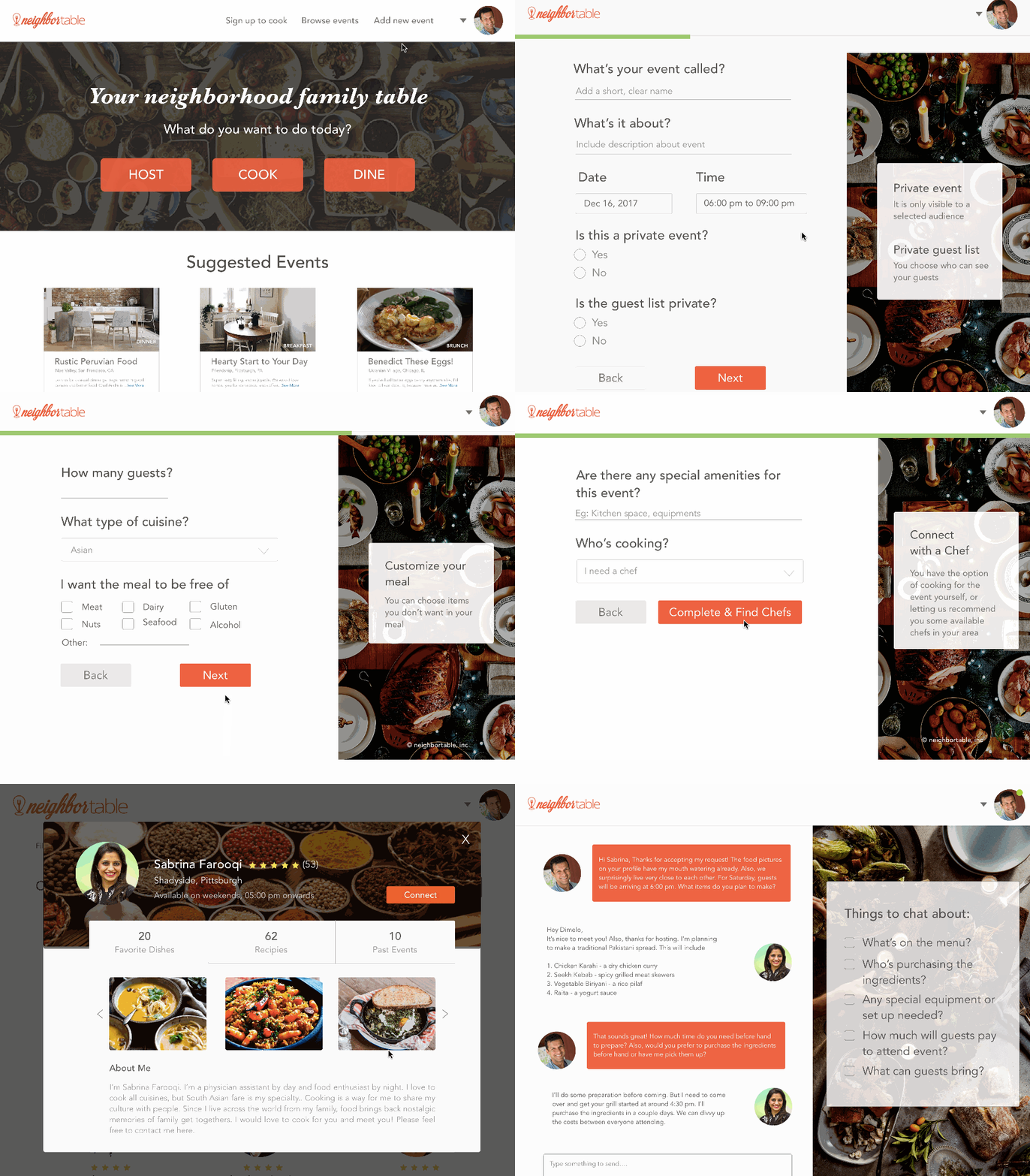
Host creates an event and requests a chef.

Host View
Step 2
Chef is notified of the opportunity.

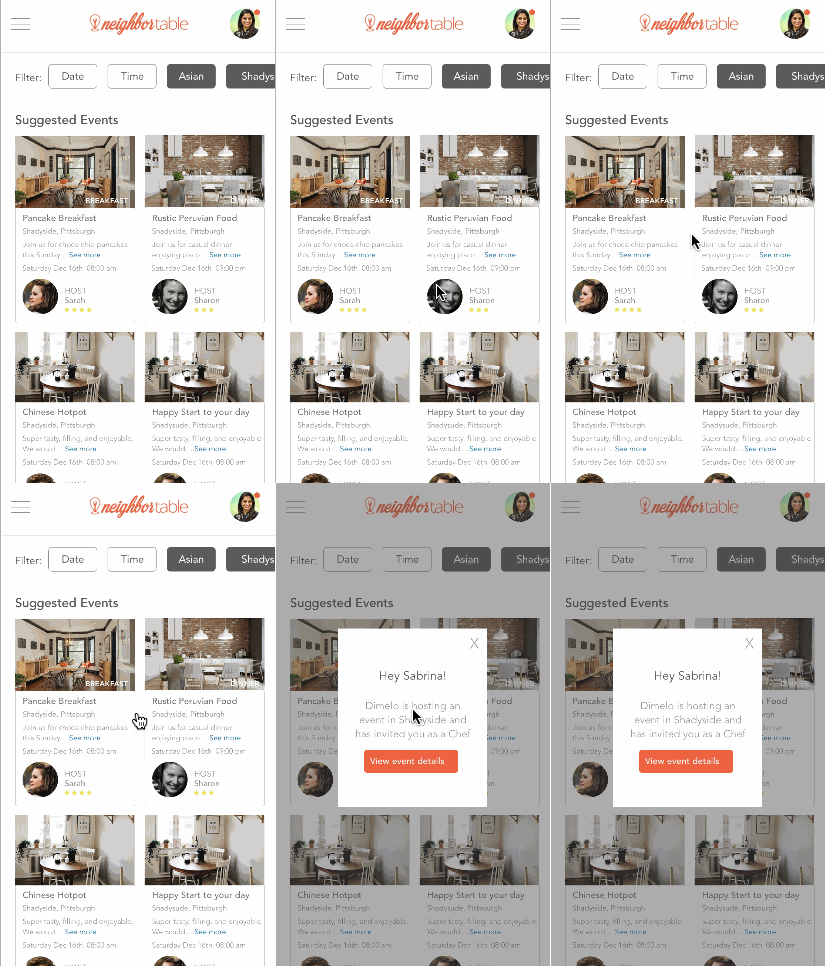
Once the host requests a chef, the chef is notified of the opportunity. If the
chef is interested, the
chef accepts.
Chef View
Step 3
Chef and Host collectively decide menu and other event logistics. Host publishes event.


Diner View
Step 4
Diner requests to join event.
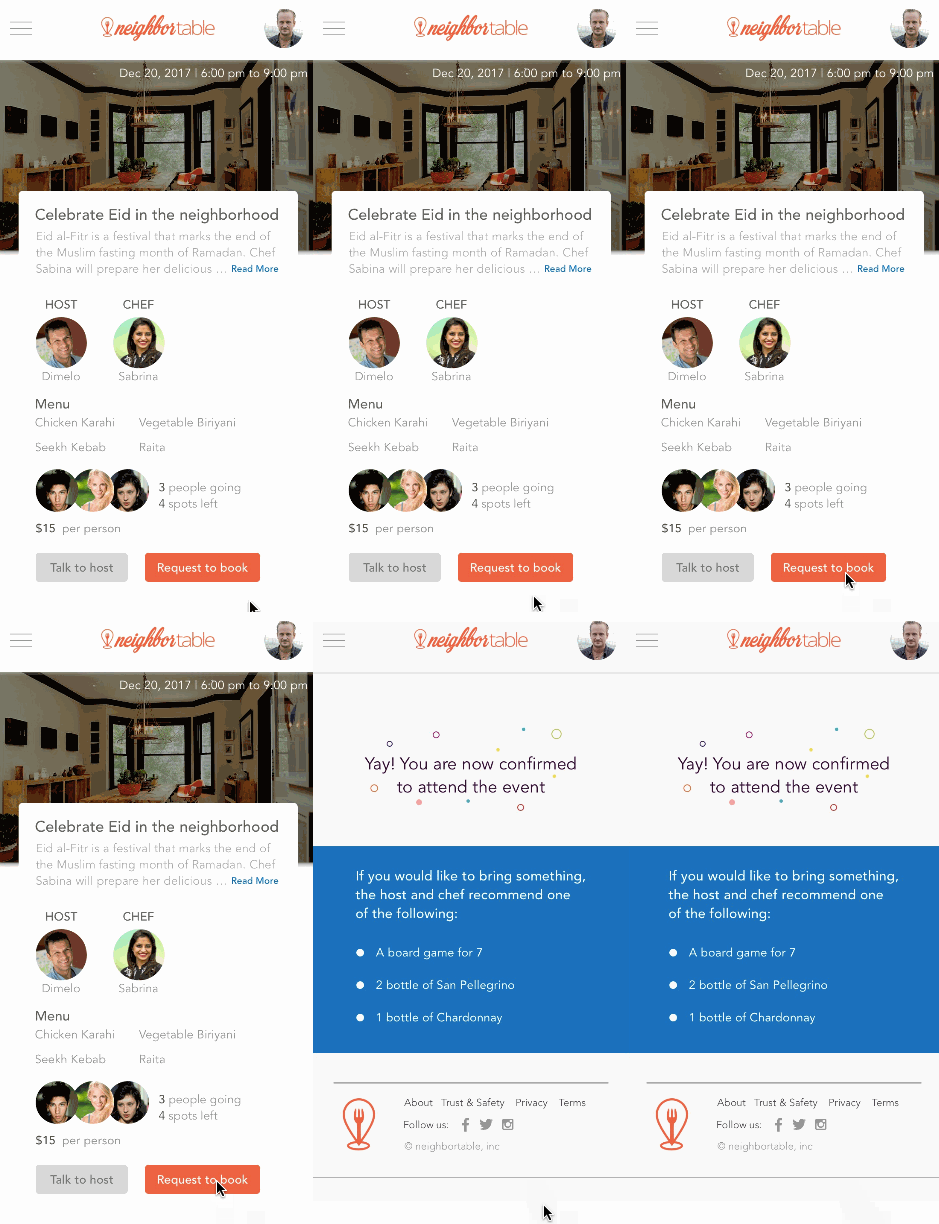
The diner requests to attend the event. Once the diner is confirmed, the diner is provided with some recommendations of items to bring.
Diner View
Service Solution

A web and mobile service that connects skilled chefs, gracious hosts, and adventurous foodies to create unforgettable meal experiences
Host
Chef
Diner
NeighborTable
Value Add
Sharing food creates common space and cultivates community.
Research has shown that eating together provides a sense of belonging, and feeling part of a community. Through a shared meal experience, individuals share thoughts, experiences, emotions, and culture, that oftentimes transcend beyond just the shared meal.
Individuals assume their desired role while simultaneously benefitting others.
The service provides an opportunity for individuals to come together and experience value in the form of personalized and intimate meal experiences.
Each individual is motivated to participate in their role while concurrently benefiting others.
A multitude of health and environmental benefits from eating home-cooked meals.
Research shows that regularly eating home-cooked meals results in the reduced consumption of process foods, a healthy lifestyle, and a reduced carbon footprint.
Process
01
Guerrilla Research
Research
Qualitative Interviews
Competive Analysis
02
Ideation
User Scenarios
Storyboarding
Speed dating
03
Design
Site Map
Wireframes
Visual Design
Preliminary Research
Our research revealed an absence in platforms that enable individuals in a neighborhood to share kitchen equipment, cook for one another, or dine together.
We conducted guerrilla research as a way to get out into the "wild", talk to users, and find out what makes them tick. We chose this as our research method because it allowed us to gain insights quickly and cost effectively. We spoke with students, millennials, families, single parents, and retired folks within several Pittsburgh neighborhoods.
Insights
Individuals prefer to eat out when
-
their kitchen space is inadequate for cooking
-
they lack specific equipment to make their desired meal
-
they prefer to not undergo a lengthy process if they are eating by themselves
Competitive Analysis
Existing services in Pittsburgh are geared towards small business ventures and are either too costly or complicated for individuals to use.
LaDorita Kitchen (Pittsburgh, PA)
La Dorita’s commercial kitchen is a fully equipped kitchen designed for caterers and small businesses. It requires members to hold liability insurance, a food protection certification, and pay an annual membership fee of $350.
EVO Rental Space & Kitchen (Pittsburgh, PA)
EVO offers commercial kitchens that are available for caterers and chefs looking to use for business. The kitchens are rented at 5 hour increments, and rates are based upon frequency of use.
Rental Kitchen Network (California & New York)
Rental Kitchen Network is aimed towards anyone who needs a kitchen for a few hours. "Kitchen landlords" can be anyone with a large, well-equipped kitchen that they don't often use, but that could earn them extra cash.
User Scenarios | Storyboarding
By creating storyboards, we were able to think tangibly yet quickly on what our service would need to provide.
We drew storyboards that covered a variety of needs within the kitchen rental and communal cooking realm. For each storyboard, we specified the context, a trigger, a decision the character makes, and the end result of that decision. Below are some examples.


People who love to cook do not have the space for it.
People who have large kitchens do not always utilize them.
Validating Our Ideas
We discovered that people are less interested in a service that helps them find a space to cook and prep, and more interested in the communal aspect of cooking and dining together.
Our evaluators expressed interest in a communal dining experience, where they can decide and share roles within a dining experience. Through our validation, we discovered that people love to host, but don't necessarily love to cook; people love to cook and try out new recipes, but may not have their own amenities for doing so; people love to eat but may not enjoy cooking or have the equipment for it. This led us to design service representing these three roles.
Site Map
After validating our concept, we created a site map encompassing the host, chef, and diner view.
Due to the involved nature of setting up a new event, we envisioned the hosts's workflow to be done using a desktop. We assumed that chef's would prefer to browse suggested events and respond to requests via mobile.
The diner has the option of viewing events through desktop and mobile, but because our target user group is in the millennium generation, we believe they will mainly utilize the service through mobile.

Wireframes
We constructed low-fidelity wireframes to lay the foundations of our prototype.


Host creates event
Host creates event
Host sees available Chefs
Host selects Chef profile
Host converses with Chef
Host & Chef publish event
Diner views suggested events
Diner selects event
Diner is confirmed

Iterative Design
Visually depicting the three roles on the home page is fundamental to clearly depict the features of the service.

First Iteration
In this iteration, we mainly discussed elements we should include on the home page. Displaying successful stories of other users is a good marketing tactic to drive customer growth.

Final Iteration
In the last iteration, our focus was to design a strong visual distinction between each role. We prioritized action-oriented events towards the top by placing suggested events immediately under the banner.

Iterative Design
Reduce cognitive load by chunking event information detailed by the host.


First Iteration
In the first iteration, we focused on reducing the amount of visible content on the screen during the event creation process. We chunked the process into three separate screens.
Final Iteration
In our last iteration, we chose the final question of the event creation process to. This way, the host has provided all other event information and can browse leisurely.
© designed by Viba Subramaniam 2018